 Skip to content
The teenage years bring emotional intensity and shifting identity before emotional regulation entirely develops. During this stage, social and emotional development in teens shapes how teenagers handle pressure and uncertainty.
Social Emotional Learning is utmost important and urgent than ever as studies show that there is tremendous emotional decline, an emotional and mental health crisis among young people. It is an urgency to recognize the importance of building emotional intelligence to build a balanced and meaningful life.
What Is Social Emotional Learning for Teens
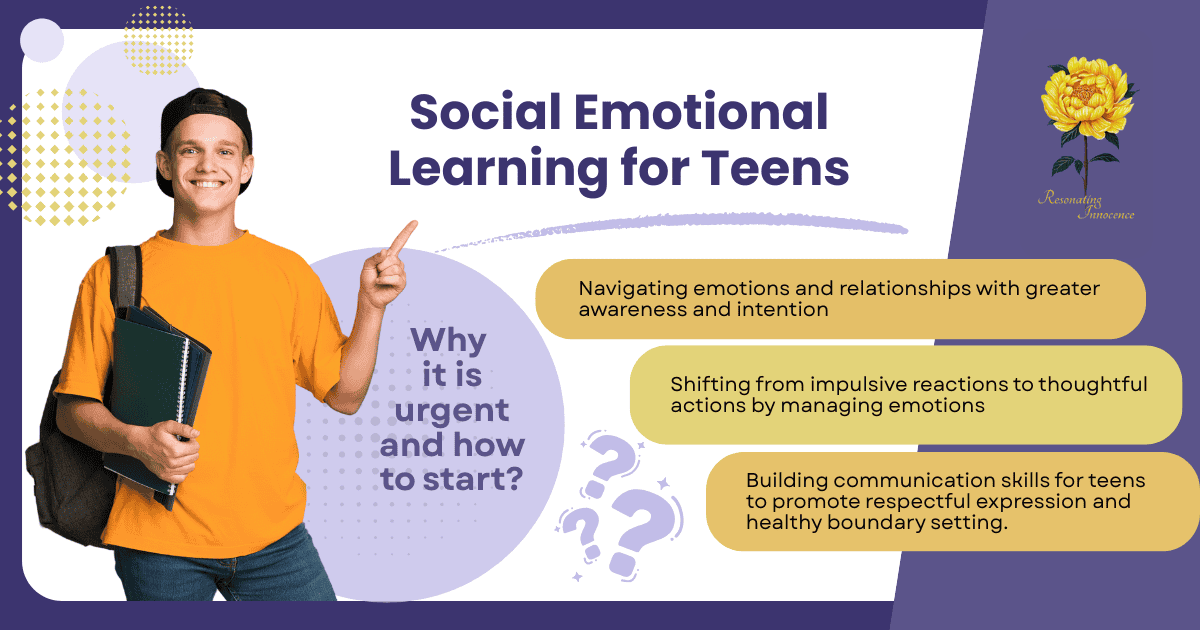
Social emotional learning supports teenagers in navigating emotions and relationships with greater awareness and intention. It focuses on helping teens recognize their emotions, develop emotional regulation, understand others, and make responsible choices in daily life that align with their values.
The habits formed during adolescence influence leadership, adaptability, relationship health, and workplace readiness, making these skills especially important during the teenage years. Social emotional learning skills also empower teens to clearly understand the difference between emotions, feelings, and moods, building inner awareness that helps them shift from impulsive reactions to thoughtful actions.
Self-awareness skills for teens help identify emotional patterns and triggers, while emotional regulation provides steadiness during stressful moments. Communication skills for teens encourage respectful expression and healthy boundary setting.
Along with empathy and conflict resolution, these research-backed skills create a practical and reliable foundation for healthy adolescent development.
Why Social Emotional Learning Is Important for Teenagers
Understanding why social emotional learning is important for teens means looking beyond grades to emotional safety and inner wellbeing. When teenagers cannot name emotions or understand their own feelings, it affects confidence, focus, and behaviour, often visible as withdrawal or conflict.
The importance of Social Emotional Learning lies in its ability to interrupt these patterns early. Is SEL important for teenage mental health.
Yes. SEL offers meaningful mental health support for teens by helping them recognize emotions, respond with empathy, cultivate kindness, compassion and build resilience to face Life’s vulnerable moments. Research shows that students who participate in Best social emotional learning workshop in India to demonstrate improved emotional skills, reduced emotional distress, stronger social connections, and better academic engagement.
Over time, these skills can reduce bullying, strengthen friendships, and foster a sense of belonging. When families and schools intentionally nurture SEL together, teens are more likely to feel valued, heard, and supported, enabling them to make choices aligned with long term values rather than momentary pressure.
Emotional and Mental Health Benefits
Emotional regulation for teens helps reduce anxiety and emotional overload. Teens learn to pause before reacting, which improves emotional balance. Mental health support for teens becomes skill based rather than crisis driven.
Social Skills and Relationship Building
Communication skills for teens strengthen clarity and honesty in relationships. Empathy development in teenagers builds understanding and respect. These skills reduce isolation and improve peer and family relationships.
How Social Emotional Learning Helps Teenagers in Real Life
Understanding how social emotional learning help teenagers become clearer when we look at common emotional pain points teens face today.
- Many teens struggle to navigate emotions, leading to confusion, withdrawal, or sudden reactions.
- Loneliness and social isolation leave teens feeling disconnected or unseen.
- During peer pressure, fear of rejection rises, while self awareness helps teens act with intention.
- Academic stress drains motivation, and without emotional regulation, teens feel overwhelmed or disengaged.
- Poor body image weaken the self esteem, SEL rebuilds self – esteem for realistic self-perception and inner worth.
- A lack of purpose makes it difficult for teens to stay motivated leading to difficulty aligning actions with deeper values.
The benefits of social emotional learning for teenagers include building emotional intelligence, building skills for supporting decision making, conflict resolution, and balanced self expression, reducing isolation and strengthening emotional connection.
Key Benefits of Social Emotional Learning for Teens
Social emotional learning offers practical outcomes that shape long term wellbeing. Ways to effectively practice emotional intelligence in teens include reflection, emotional vocabulary building, and perspective taking. Emotional regulation for teens supports stress management, while self awareness skills for teens strengthen accountability and confidence.
Additional benefits include improved concentration, healthier relationships, reduced emotional distress and establishes clearer alignment with personal goals.
Core Social Emotional Learning Skills and Their Impact
Social emotional learning skills work together to support emotional and social growth.
| Skill Area | Development Focus | Impact on Teen Life |
| Self awareness | Emotional clarity | Better decisions and self trust |
| Emotional regulation | Stress management | Reduced anxiety and impulsive behavior |
| Empathy | Perspective taking | Healthier relationships |
| Communication | Clear expression | Stronger boundaries |
| Conflict resolution | Problem solving | Respectful handling of disagreements |
These skills form the foundation of emotional resilience.
Social Emotional Learning in Schools and Education Systems
Schools play a crucial role in emotional development. SEL in schools for teens integrates emotional learning into everyday education through structured conversations, reflection activities, and collaborative tasks. Social emotional learning programs for teenagers help create spaces where emotions can be discussed without judgment.
However, in many education systems today, teachers are expected to focus primarily on academic outcomes and are often not equipped or trained to guide students through emotional challenges. When emotional guidance is missing at school, teenagers frequently turn to social media for validation, advice, and emotional expression, which can be confusing and misleading.
Check out our
When Should Teens Start Social Emotional Learning
SEL for teenagers is most effective when introduced early, as emotional habits formed during adolescence shape teen emotional intelligence. Many parents want to support their child’s emotional growth but are unsure what to do or where to start. Early exposure allows families to rely on structured programs that build emotional awareness and regulation with expert support
At the same time, social emotional learning for teens remains valuable at any age. Parents do not need to have all the answers. Professional support from educators, coaches, can provide clear direction and reassurance. Older adolescents benefit from educator guided discussions and activities focused on emotional regulation and conflict resolution, helping them build confidence, responsibility, and emotional strength through a life skill that supports long term wellbeing.
How Parents Can Support Social Emotional Learning at Home?

Parents are powerful emotional role models, and parenting strategies for teen emotional growth work best when they focus on connection rather than control. One of the most effective ways to teach social emotional learning to teens is through everyday interactions, where teens observe how adults manage emotions, handle stress, resolve conflict and maintain relationships.
Encouraging Open Communication
Communication skills for teens improve when parents listen without judgment and allow honest expression. Open conversations build emotional safety and trust, making it easier for teens to share challenges and seek guidance.
Teaching Emotional Awareness and Self Control
Emotional regulation for teens develops when parents model calm responses during difficult moments. Self awareness skills for teens grow when emotions are acknowledged, named, and normalized, helping teenagers understand their inner experiences and respond thoughtfully.
Effective Social Emotional Learning Activities for Teens
Practice strengthens SEL. Social emotional learning activities for teens should be consistent and relatable.
Journaling supports emotional clarity. Group discussions encourage shared understanding. Role playing scenarios help teens practice communication and conflict resolution. Mindfulness practices support emotional balance and focus. Goal Setting provides focus and purpose increasing self efficacy.
Long Term Impact of Social Emotional Learning on Teen Development
Social and emotional development in teens shapes how they function in adulthood, the skills learned establishes success in future professional settings.
Strong teen emotional intelligence supports balanced decisions and long term resilience.
Ongoing mental health support for teens through social emotional learning reduces emotional suppression and builds healthier coping patterns later in life.
Final Thoughts on Social Emotional Learning for Teens
Social emotional learning for teens is a life skill, not an academic trend. SEL for teenagers builds emotional literacy, resilience, and empathy during a critical developmental stage. Parents and educators must view SEL as essential preparation for life. Emotional competence shapes how teens face vulnerability, pursue positive goals, and build meaningful lives.
Contact us for more information about Social Emotional Learning for Teens.
Frequently Asked Questions
1. What is social emotional learning for teens and why is it important?
Social emotional learning helps teens understand emotions, manage stress, build empathy, and make responsible decisions. It supports mental health, resilience, and healthy development during adolescence.
2. How does social emotional learning help teenagers with mental health?
SEL strengthens emotional regulation, self awareness, and coping skills. These reduce anxiety, improve stress management, and encourage seeking support.
3. How can parents and schools teach social emotional learning to teens?
Parents and schools can support SEL through open communication, emotional modeling, structured programs, reflection, and practice of empathy and conflict resolution.
4. Are social emotional learning programs effective for teenagers?
Yes. Research shows SEL programs improve emotional regulation, social skills, academic engagement, and overall wellbeing.
5. How can SEL help teens manage stress and emotions?
SEL helps teens recognize emotional triggers, pause before reacting, and respond thoughtfully using emotional awareness and mindfulness.

