 Skip to content

Not all divorces happen in courtrooms. Some unfold quietly inside homes where parents continue living together but emotionally drift apart. This situation is often called a silent divorce. While adults may believe they are protecting their family by dodging open conflict, the reality is far more complex.
Children affected by silent divorce mostly experience confusion, emotional insecurity, and distress without completely understanding why their home no longer feels emotionally safe. To understand how children experience silent divorce, it is important to recognise that children are deeply sensitive to their emotional surroundings.
Even when parents do not argue openly, the emotional distance between parents creates an unspoken tension that kids absorb every day. Even without words, children notice when warmth disappears and conversations feel distant.
What Is a Silent Divorce?
A silent divorce refers to a situation where parents remain legally married and live under the same roof but share little emotional connection. There may be negligeable communication, absence of affection, and a routine based on logistics rather than partnership.
In parents’ silent divorce and children, the household may appear stable from the outside. Meals are prepared, school runs happen on time, and family events are attended together. Yet inside the home, a family emotional disconnect dominates daily life. Children grow up witnessing emotional withdrawal rather than healthy interaction.
This environment often leads to emotional neglect in families, where children’s emotional needs are unintentionally overlooked. Parents may be consumed by their own dissatisfaction, leaving little area to provide warmth, reassurance, and emotional availability.
Can Children Sense Emotional Distance Between Parents
A common question parents ask is can children sense emotional distance between parents. Research in child psychology consistently shows that children are remarkably perceptive. Even young children notice changes in tone, body language, and daily interactions.
When affection disappears or communication becomes cold and transactional, children experience childhood emotional insecurity. They may not have the language to describe what feels wrong, but their bodies and emotions react to the tension.
According to studies in child psychology and family conflict, children exposed to emotionally distant parental relationships often internalize the stress. They may assume responsibility for the emotional climate at home or fear that family stability could collapse at any moment.
Impact of Silent Divorce on Children well-being
The emotional impact of silent divorce on children is profound and often underestimated. Living in a home where love feels absent can be just as damaging as living in a home filled with conflict.
Emotional wellbeing of children suffers when emotional safety is missing. Research published in child development journals suggests that prolonged exposure to emotional neglect increases the risk of internalized emotional struggles.
Children commonly experience stress, anxiety, depression and confusion as they try to make sense of their parents’ emotional withdrawal. These feelings may surface subtly through mood changes or more visibly through emotional breakdowns.
Unresolved and suppressed emotions for a very long time leads to psychosomatic responses, where psychological distress manifests as physical discomfort or illness. With time, the body begins to carry the weight of unexpressed emotions, affecting overall health.
The Mind-Heart-Body link reveals how overlooked emotions can silently breed as mental turmoil and physical diseases
Emotional Responses Children Commonly Experience
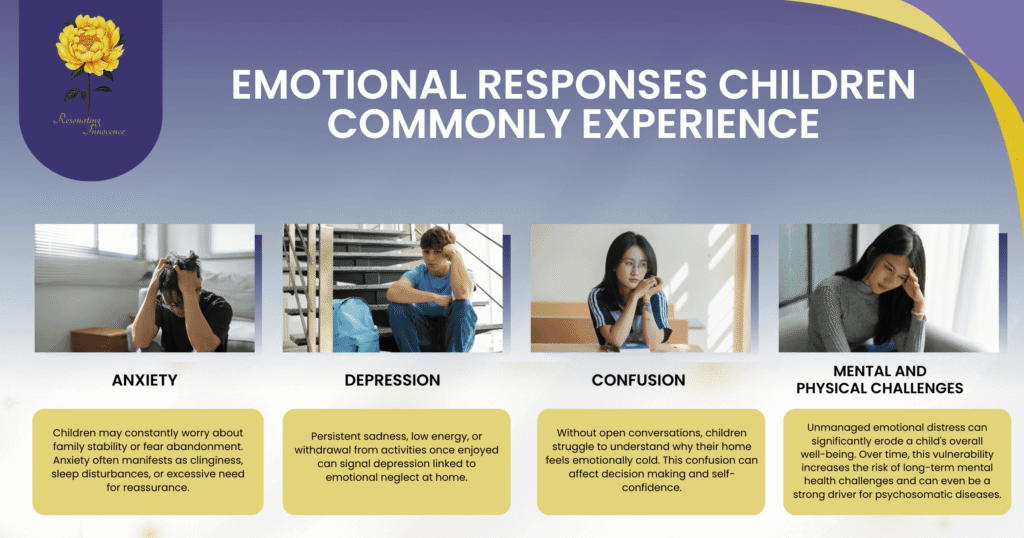
Children respond to silent divorce in different ways depending on age, temperament, and support systems. Common emotional responses include:
- Anxiety – Children may constantly worry about family stability or fear abandonment. Anxiety often manifests as clinginess, sleep disturbances, or excessive need for reassurance.
- Depression – Persistent sadness, low energy, or withdrawal from activities once enjoyed can signal depression linked to emotional neglect at home.
- Confusion – Without open conversations, children struggle to understand why their home feels emotionally cold. This confusion can affect decision making and self-confidence.
- Emotional Health – Unmanaged emotional distress can significantly erode a child’s overall well-being. Over time, this vulnerability increases the risk of long-term mental health challenges and can even be a strong driver for psychosomatic diseases.
Behavioural and Cognitive Changes in Children
Silent divorce does not only affect emotions. It also influences how children behave and think. Many children develop behavioural issues as a way to express unmet emotional needs.
These behaviors may include irritability, aggression, defiance, or excessive compliance. Cognitive development can also be impacted. Chronic stress interferes with cognition, affecting memory, attention, and problem solving skills.
Mental health professionals emphasize that prolonged emotional neglect negatively affects child mental health, increasing the risk of anxiety disorders and mood related conditions later in life.
Academic and Focus Related Challenges
School is often where the impact of silent divorce becomes visible. Children experiencing emotional distress at home frequently face academic issues such as declining grades and difficulty concentrating.
The constant emotional tension contributes to stress, which interferes with the brain’s ability to focus and retain information. Research in educational psychology highlights a strong link between emotional safety at home and academic performance.
In cases of silent divorce and child mental health, children may appear distracted or disengaged in class, not due to lack of ability but because their emotional energy is consumed by unresolved family stress.
Social and Relationship Effects
Growing up in an emotionally disconnected household shapes how children relate to others. Weak modelling of healthy communication affects social skills, making it harder for children to form trusting relationships.
Many children struggle with relationship issues, either becoming overly dependent or emotionally distant themselves. Studies on attachment theory suggest that children learn relational patterns by observing their parents.
Growing up with emotionally distant parents can normalize emotional withdrawal, increasing the likelihood of repeating similar patterns in adulthood friendships and romantic relationships.
Seeking Refuge Outside the Home
When emotional needs are unmet at home, children often look elsewhere for comfort and validation. Many seek refuge in social media, online communities, or peer groups where they feel seen and heard.
In adolescence, some children turn to risky coping mechanisms such as substance use to numb emotional pain. Research in adolescent psychology shows higher vulnerability among children living in loveless marriages where emotional connection is absent.
While external support can be helpful, relying solely on outside sources may expose children to additional risks if not guided carefully.
Long Term Effects of Parents Staying Together Unhappily
The effects of parents staying together unhappily extend well into adulthood. Children raised in silent divorce environments often carry unresolved emotional wounds.
Common silent divorce effects on kids include difficulty trusting others, fear of intimacy, and challenges expressing emotions. Long term studies reveal that what happens to children in emotionally distant marriages often includes higher likelihood of relationship dissatisfaction later in life.
These children may struggle to identify healthy emotional boundaries, having never seen them modelled consistently.
The Hidden Emotional Cost Children Carry
Silent divorce reflects a painful reality where parents remain together outwardly but live emotionally disconnected lives. While the family may appear stable, emotional intimacy slowly fades, creating an unspoken emptiness within the home.
Parents may believe staying together protects their children, yet research shows that children often absorb this emotional absence deeply. Children in such homes sense that something is wrong even when nothing is openly discussed. Love feels missing, yet dependency remains, creating an inner emotional conflict.
Over time, this constant emotional alertness shapes how children regulate stress and emotional safety. Research based on Emotional Security Theory by Cummings and Davies demonstrates that ongoing parental emotional disengagement heightens anxiety and undermines a child’s sense of security, even in the absence of visible conflict.
The deeper impact often surfaces later in life. When emotional neglect becomes normalised in childhood, rejection and silence begin to feel familiar rather than alarming. Many children internalise the belief that emotional absence is a natural part of relationships. This conditioning frequently leads to validation seeking in adolescence and adulthood, as emotional reassurance was never consistently available at home.
The most damaging aspect of silent divorce is that children carry their parents’ unresolved emotional disconnect without the understanding or emotional tools to process it. This hidden burden often appears later as fear of abandonment, difficulty trusting others, and confusion about what healthy emotional connection truly looks like.
Signs Silent Divorce Is Affecting a Child
Recognizing the signs silent divorce is affecting a child is crucial for early intervention. Warning signs include emotional withdrawal, sudden behavioural changes, academic decline, or frequent physical complaints like headaches and stomach aches.
Professionals emphasize that how does emotional neglect at home affect children varies, but persistent patterns of distress should never be ignored. Early emotional support can significantly reduce long term harm.
How Parents Can Respond to How Children Experience Silent Divorce
Even when emotional connection between parents is strained, there are ways to reduce harm. Understanding how parental emotional neglect affects children is the first step toward change.
Parents can prioritize open communication, ensuring children feel heard and reassured. Consistent emotional presence from at least one caregiver greatly improves outcomes.
Learning how parents can support how children experience silent divorce includes seeking counselling, modelling respectful communication, and acknowledging emotional realities contact us rather than pretending everything is fine.
Practical Protective Measures
| Area of Impact | What Children Experience | How Parents Can Help |
| Emotional safety | Confusion and insecurity | Open age appropriate conversations |
| Mental health | Anxiety and sadness | Access to counselling support |
| Academic focus | Poor concentration | Emotional check ins and routine |
| Social development | Relationship difficulties | Modelling healthy communication |
Research in family therapy consistently shows that children cope better when emotional honesty and reassurance are present, even if parents remain together.
Conclusion
The impact of silent divorce on children is real, profound, and often unseen. When parents remain together but emotionally disconnected, children may sense the distance long before they can name it. What looks like stability on the surface can quietly weaken a child’s sense of safety, trust, and belonging.
Supporting a child’s emotional wellbeing starts with honest awareness. Children do not need flawless parents. They need parents who are emotionally present, responsive, and willing to acknowledge what is happening beneath the surface.
With empathy, open communication, and timely support, families can reduce long-term emotional harm and help children grow into secure, emotionally healthy adults.
If this resonates with you, consider joining our workshop to overcome. It offers practical guidance, shared experiences, and expert support to help parents strengthen emotional connection and create healthier family dynamics.
Frequently Asked Questions
1. Is staying together without emotional connection harmful for children?
Staying together without emotional connection can harm children over time, as emotional coldness creates insecurity, confusion, and stress, which may affect mental health, emotional development, and future relationships.
2. What are the signs that silent divorce is affecting a child?
Signs may include emotional withdrawal, constant anxiety, mood swings, declining academic performance, changes in behaviour, loss of interest in activities, and frequent physical complaints like headaches or stomach aches.
3. How does parental emotional neglect impact child development?
Parental emotional neglect can affect a child’s emotional regulation, self confidence, learning ability, mental health, and social development, making it harder to form secure relationships and manage stress as they grow.

